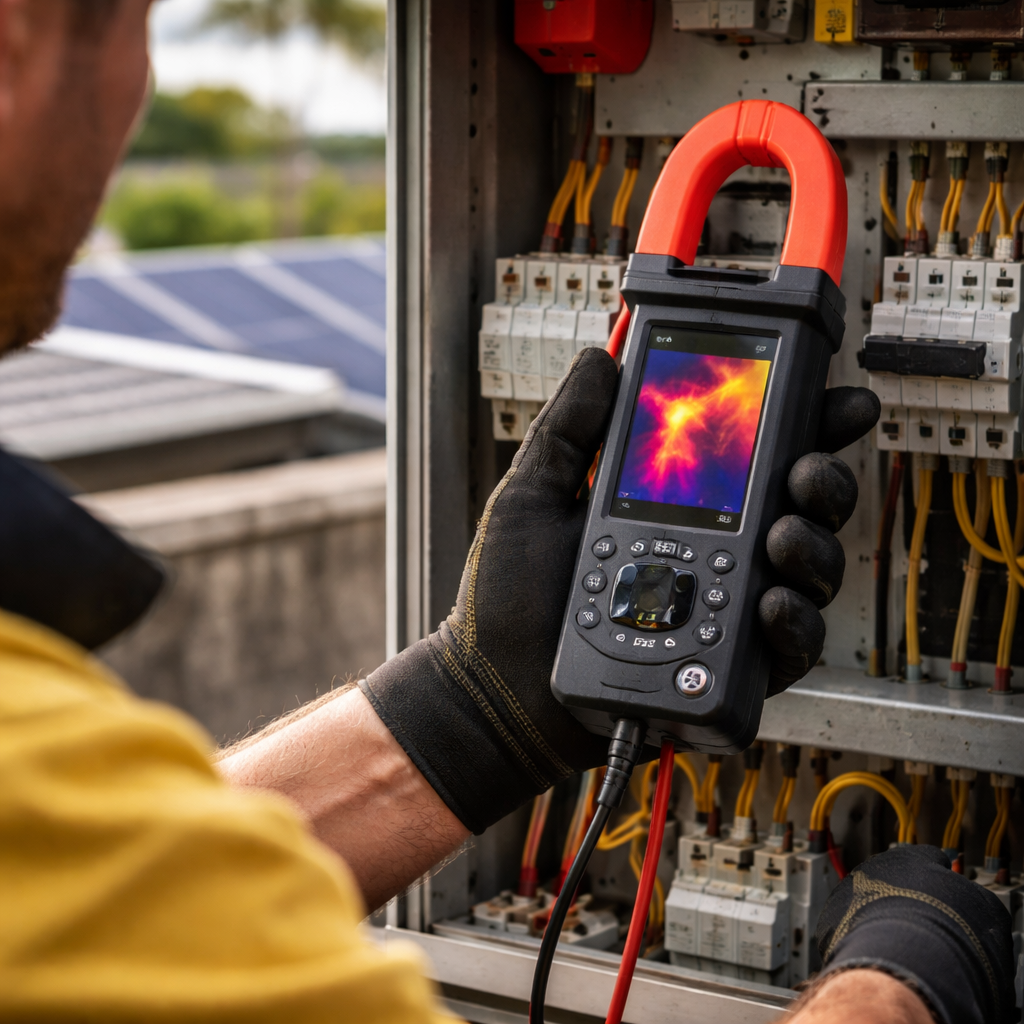
In Australia, electrical switchboards operate under demanding conditions.
From suburban homes with rooftop solar systems to commercial buildings running three-phase equipment, today’s installations carry more load than ever before.
While installations must comply with AS/NZS 3000 (Wiring Rules), ongoing inspection and maintenance are equally critical to ensure long-term safety and performance.
One of the most effective tools for preventive maintenance is thermal imaging.
Why Switchboard Inspections Matter in Australia
Australian installations often include:
-
Solar inverter connections
-
Battery storage systems
-
EV charging circuits
-
High-capacity air conditioning loads
-
Three-phase commercial distribution
These systems increase stress on:
-
Main switch terminals
-
Busbars
-
Circuit breakers
-
Cable lugs
Even when an installation complies with AS/NZS 3000 at the time of installation, mechanical loosening, corrosion, and thermal cycling can lead to overheating over time.
How Thermal Imaging Supports Preventive Maintenance
AS/NZS 3000 emphasises safe installation practices, correct conductor sizing, and protection against overheating.
However, electrical degradation can occur long after installation.
Thermal imaging allows electricians to:
-
Detect loose or high-resistance connections
-
Identify phase imbalance
-
Spot overheating breakers
-
Compare temperature differences across similar circuits
Because overheating is often the first visible sign of electrical deterioration, thermal inspection provides an early warning before faults escalate.
What to Check First During a Switchboard Inspection
If you only have limited time on-site, prioritise the following:
1️⃣ Main Switch & Incoming Supply
These carry the highest load.
Look for uneven heating between phases or hot spots at termination points.
2️⃣ Solar Inverter Feed Circuits
In many Australian homes, solar systems introduce additional current flow through the switchboard.
Check:
-
Inverter breakers
-
Neutral connections
-
DC isolator terminations
Solar installations are a common location for heat-related issues.
3️⃣ EV Charger Circuits
With increasing EV adoption across Australia, EV charging circuits place sustained load on switchboards.
Inspect:
-
Dedicated EV breakers
-
Cable lugs
-
Phase distribution
4️⃣ Three-Phase Distribution
In commercial and light industrial settings, compare temperatures across all three phases.
A temperature difference above 20–30°C between similar components should be investigated.
Understanding Safety Categories in Australian Work Environments
When inspecting switchboards connected to mains supply, equipment should be appropriately rated.
Depending on the measurement location:
-
CAT III 600V is typically required for distribution-level testing
-
CAT IV 600V may be required at service entrances
Using correctly rated instruments is essential for safe work practices in Australian installations.
Combining Thermal Imaging with Electrical Verification
Thermal imaging identifies abnormal heat.
Electrical testing confirms the cause.
For many Australian electricians, using a thermal imaging multimeter allows both steps to be completed efficiently:
-
Scan for hot spots
-
Measure voltage
-
Check current
-
Verify load conditions
Portable tools such as the BSIDE SH9 are suitable for residential and light commercial switchboards where compact design and quick scanning are important.
For larger commercial or industrial switchboards, higher-resolution models like the BSIDE SH7 provide clearer temperature differentiation during preventive maintenance programs.
The key advantage is efficiency — reducing inspection time while improving diagnostic accuracy.
Common Warning Signs in Australian Installations
Watch for:
-
Uneven phase temperatures
-
Hot neutral conductors
-
Discoloured terminations
-
Concentrated heat at a single lug
-
Repeated hot spots during periodic checks
These may indicate increased resistance or mechanical degradation.
Best Practice for Ongoing Compliance
To maintain safe operation aligned with Australian standards:
-
Perform periodic thermal inspections
-
Inspect under normal operating load
-
Record baseline temperatures
-
Compare results over time
-
Re-torque connections where required
Preventive maintenance reduces unexpected downtime and supports workplace safety compliance.
Final Thoughts
Switchboards in Australia face increasing load demands due to solar systems, EV chargers, and modern electrical infrastructure.
While AS/NZS 3000 governs safe installation, proactive maintenance ensures continued reliability.
Thermal imaging provides a fast and non-invasive way to detect overheating before failure occurs.
A short inspection today can prevent a costly shutdown tomorrow.