
Que scanner en priorité en 10 minutes
L'imagerie thermique est devenue l'un des outils les plus rapides et les plus fiables pour l'inspection électrique.
Mais avoir un appareil thermique ne suffit pas.
La vraie question est :
Si vous n'avez que 10 minutes, que devriez-vous scanner en premier ?
Cette liste de contrôle pratique se concentre sur les points électriques à risque les plus élevés qui développent le plus fréquemment des problèmes de surchauffe — bien avant l'apparition de dommages visibles.
Pourquoi un scan de 10 minutes est important
De nombreuses pannes électriques ne se produisent pas soudainement.
Elles se développent progressivement en raison de :
-
Connexions lâches
-
Corrosion
-
Distribution de charge inégale
-
Composants vieillissants
Un scan thermique rapide pendant la charge de fonctionnement normale peut identifier les signes avant-coureurs avant qu'ils ne se transforment en pannes.
Même des inspections courtes, si elles sont effectuées correctement, peuvent éviter des temps d'arrêt coûteux.
Liste de contrôle d'inspection thermique de 10 minutes
Minutes 1-2 : Disjoncteur principal et bornes d'entrée
Commencez par le disjoncteur principal et les cosses de câble d'alimentation.
Ceux-ci supportent la charge la plus élevée et subissent un stress mécanique important.
Recherchez :
-
Une borne nettement plus chaude que les autres
-
De la chaleur concentrée sur une seule vis ou cosse
-
Une température inégale entre les phases
Une différence de température supérieure à 20°C entre des points similaires est un signal d'alarme.
Minutes 3-4 : Connexions des barres omnibus
Ensuite, scannez le long de la barre omnibus.
Concentrez-vous sur :
-
Les points de jonction
-
Les zones de fixation mécanique
-
Les points de transition entre le cuivre et l'aluminium
La chaleur concentrée à une connexion spécifique indique généralement une résistance de contact accrue.
Minutes 5-6 : Disjoncteurs de circuit de dérivation
Comparez les disjoncteurs transportant des charges similaires.
Ce qu'il faut rechercher :
-
Un disjoncteur significativement plus chaud que les unités adjacentes
-
De la chaleur localisée à la borne plutôt qu'au corps du disjoncteur
-
Une décoloration combinée à une température élevée
La comparaison est plus importante que la température absolue.
Minutes 7-8 : Démarreurs et contacteurs de moteur
Les circuits moteurs génèrent souvent de la chaleur en raison d'un courant d'appel élevé.
Inspectez :
-
Les bornes du contacteur
-
Les connexions du relais de surcharge
-
Les composants de commutation à courant élevé
Un chauffage inégal entre les phases peut indiquer un déséquilibre ou une dégradation de la connexion.
Minutes 9-10 : Points de distribution de courant élevé
Enfin, scannez :
-
Les cosses de câble
-
Les blocs de distribution
-
Les bornes de transformateur
Ces zones développent fréquemment une résistance cachée qui n'apparaît pas lors des tests électriques standard.
Quelle différence de température est préoccupante ?
Utilisez une comparaison relative plutôt que des chiffres absolus.
Directives générales sur le terrain :
-
10-15°C au-dessus de composants similaires → Surveiller
-
Différence de 20-30°C → Enquêter
-
40°C ou plus → Action immédiate
Des composants identiques sous une charge similaire ne devraient pas présenter de grandes différences de température.
Pourquoi l'imagerie thermique révèle ce que les appareils de mesure manquent
Les mesures de tension et de courant peuvent sembler normales même lorsque la résistance à une connexion augmente.
L'imagerie thermique détecte la chaleur causée par cette résistance dans des conditions de charge réelles.
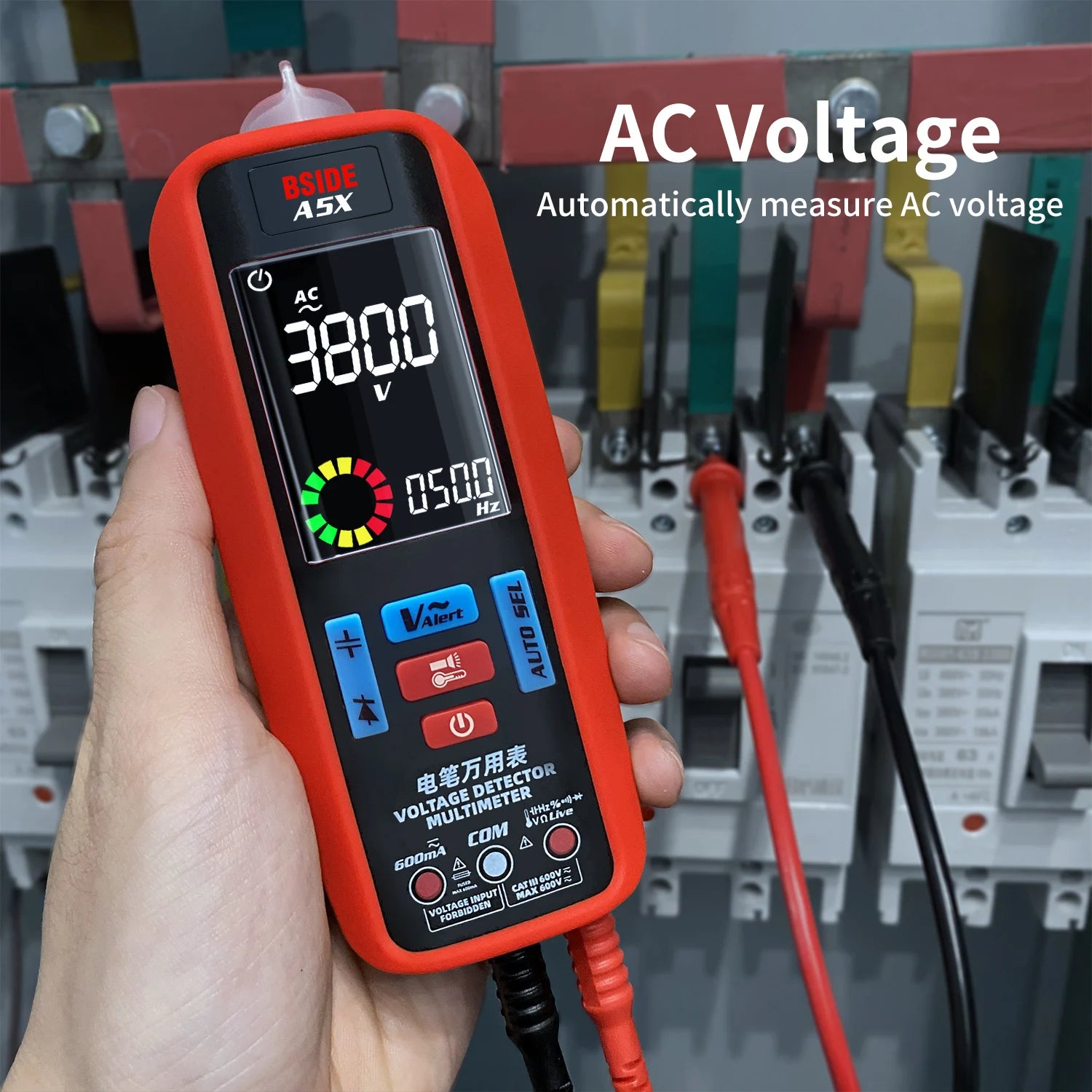
Pour de nombreux techniciens, l'utilisation d'un multimètre d'imagerie thermique compact leur permet de :
-
Scanner les points chauds
-
Vérifier immédiatement la tension ou le courant
-
Confirmer si le problème est lié à la charge ou à la résistance
Lors des inspections de routine, des appareils tels que le BSIDE SH9 sont souvent utilisés pour le scan rapide des tableaux en raison de leur portabilité et de leur capacité de vérification en temps réel.
Dans les panneaux industriels plus grands, les modèles haute résolution comme le BSIDE SH7 offrent une clarté améliorée pour les programmes de maintenance préventive.
L'avantage est l'efficacité — identifier et vérifier sans changer d'instrument.
Signes courants de défaillance électrique en développement
Pendant votre scan, soyez attentif à :
-
Points chauds uniques
-
Températures de phase inégales
-
Gradients de température graduels le long d'un conducteur
-
Points chauds répétés lors des inspections historiques
L'imagerie thermique devient plus puissante lorsque les inspections sont effectuées périodiquement et que les températures de référence sont enregistrées.
Meilleures pratiques pour une inspection thermique sûre
-
Toujours scanner sous une charge de fonctionnement normale
-
Maintenir les couvercles des panneaux correctement fixés
-
Maintenir une distance de sécurité si nécessaire
-
Ne jamais se fier uniquement à l'imagerie thermique — vérifier avec des mesures électriques
L'imagerie thermique identifie le symptôme. Les tests électriques confirment la cause.
Réflexions finales
Une inspection thermique de 10 minutes peut éviter des semaines d'arrêt.
La clé est de savoir où regarder en premier.
En se concentrant sur les connexions à forte charge, en comparant des composants similaires et en vérifiant les lectures anormales, les techniciens peuvent détecter la résistance cachée tôt.
Les systèmes électriques tombent rarement en panne sans avertissement.
La chaleur est souvent le premier signal.
Si vous savez où scanner, vous le verrez.